A top-ranked League of Legends player makes somewhere north of 200 discrete decisions per match. Most last under a second.
That volume is not a clutch problem. It is a stamina problem. The training methods catching on across Canadian and UK esports rosters are not coming from sports psychology textbooks.
They are coming from poker.
Specifically, from poker’s tempo mechanics. Not bluffing. Not hand odds.
The part that forces you to decide fast, repeatedly, under compounding pressure.
The Real Problem: Decision Fatigue, Not Decision Quality
Most esports coaching focuses on the wrong thing. Teams drill individual decisions: the right ability rotation, the correct map call, the optimal trade. Useful – but it does not address what happens to decision quality across a two-hour match as cognitive load accumulates.
The problem is not that competitors make bad decisions. Good decisions get slower and shallower as a session extends. By the late game, competitors are spending more mental energy per choice. That is the stamina gap.
Traditional sports psychology treats this as a pressure-response issue. That framing misses the cause. Late-game breakdown is usually not about nerves.
It is about depleted pattern-recognition capacity built up over hundreds of earlier micro-choices.
Why Poker’s Rush Format Maps Onto This Exactly
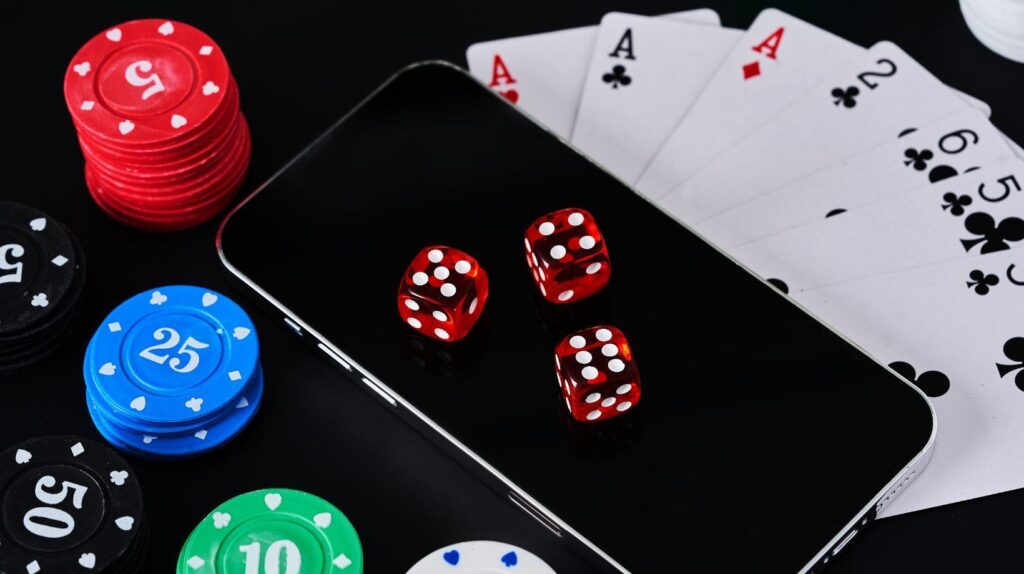
This is where online poker becomes a legitimate training tool. GGPoker’s Rush & Cash format moves players to a new table the instant a hand ends. No downtime.
No reset. Decisions arrive continuously, with no natural pause to recover cognitive rhythm.
That compression is the training mechanism. Rush & Cash rewards those who pattern-match fastest with acceptable accuracy – the exact skill profile a late-game esports competitor needs.
The parallel is structural. In both formats:
- Time per decision is short and fixed
- The cost of hesitation compounds across the session
- Pattern recognition outperforms deliberation at speed
- Stamina across the session matters as much as peak performance in any single moment
Poker is a skill game. Long-term results depend on mathematical decision-making and pattern recognition, not chance. That is precisely why it transfers – the training stress is real and the feedback is immediate.
The Tempo Coach Framework: How to Actually Train This
The practical method emerging in structured esports programs has three phases.
Establish a Decision Baseline
Before compressing anything, measure current decision velocity. Record a full-length practice match and tag every decision point: ability use, positioning choice, target selection, macro call. Count them.
Time them.
Most competitors are surprised by two things: how many decisions they made, and how much slower their average decision time gets in the final third of the match. That drift is the target.
Compressed Tempo Sessions
This is where Rush-style poker comes in as a cross-training tool. The competitor runs 30-minute sessions in a high-speed poker format, played as entertainment with a fixed, pre-set budget. The goal is not to win money.
The goal is to sustain decision velocity across 150 to 200 hands without quality degrading.
Track one metric only: did decision time increase in the back half of the session? If yes, the stamina gap is now visible. Repeat over two to three weeks until the back-half drift disappears.
A ggpoker promo code can extend your practice budget – useful for treating sessions as cognitive reps rather than results.
Transfer Back to the Game
Re-record the same match format from Phase 1. Tag and time decisions again. The hypothesis: back-half decision drift will be smaller.
Coaches using this method report that competitors describe the late game as feeling less heavy – not because they are sharper in the moment, but because they have trained the endurance to stay at tempo.
The fix is not more game-specific drilling. It is building underlying cognitive endurance separately, then letting it transfer.
What a Tempo Coach Actually Does
The role is new enough that job titles vary – performance coach, cognitive trainer. The function is the same: treat decision stamina as a trainable quality, not a personality trait.
A tempo coach does not watch replays and suggest better ability rotations. They:
- Design session loads
- Track decision-time curves across a week of practice
- Prescribe cross-training formats – including poker – to stress the decision system without adding game-specific fatigue
As AI coaching tools become standard in match preparation, the volume of decisions a competitor must process increases. Cognitive stamina becomes the competitive variable that cannot be automated away.
A Note on Poker as Training Tool
GGPoker’s tier-based Ocean Rewards program tracks consistent volume across sessions – not peak effort in one sitting, but sustainable engagement over many. That structure mirrors how tempo coaches design training loads.
For texas holdem poker specifically, the decision density in Rush-format cash games is high enough to generate real training stimulus in a short session. That is the practical reason it fits the method.
Keep the budget fixed and treat it as an entertainment cost. The value is the cognitive rep, not the result.
Start Here
Pick one upcoming practice week. Run the baseline measurement on day one. Run three 30-minute compressed poker sessions across the week.
Re-measure on day seven. Look only at decision-time drift in the back half of each session.
That single metric will tell you whether you have a stamina problem or a skill problem. Most competitors discover it is stamina. And stamina, unlike talent, responds to training.